

Arrel Achieves ISO 27001 and SOC 2 Type II Certification, Wins Circle Grant, and Integrates Sodot MPC Technology
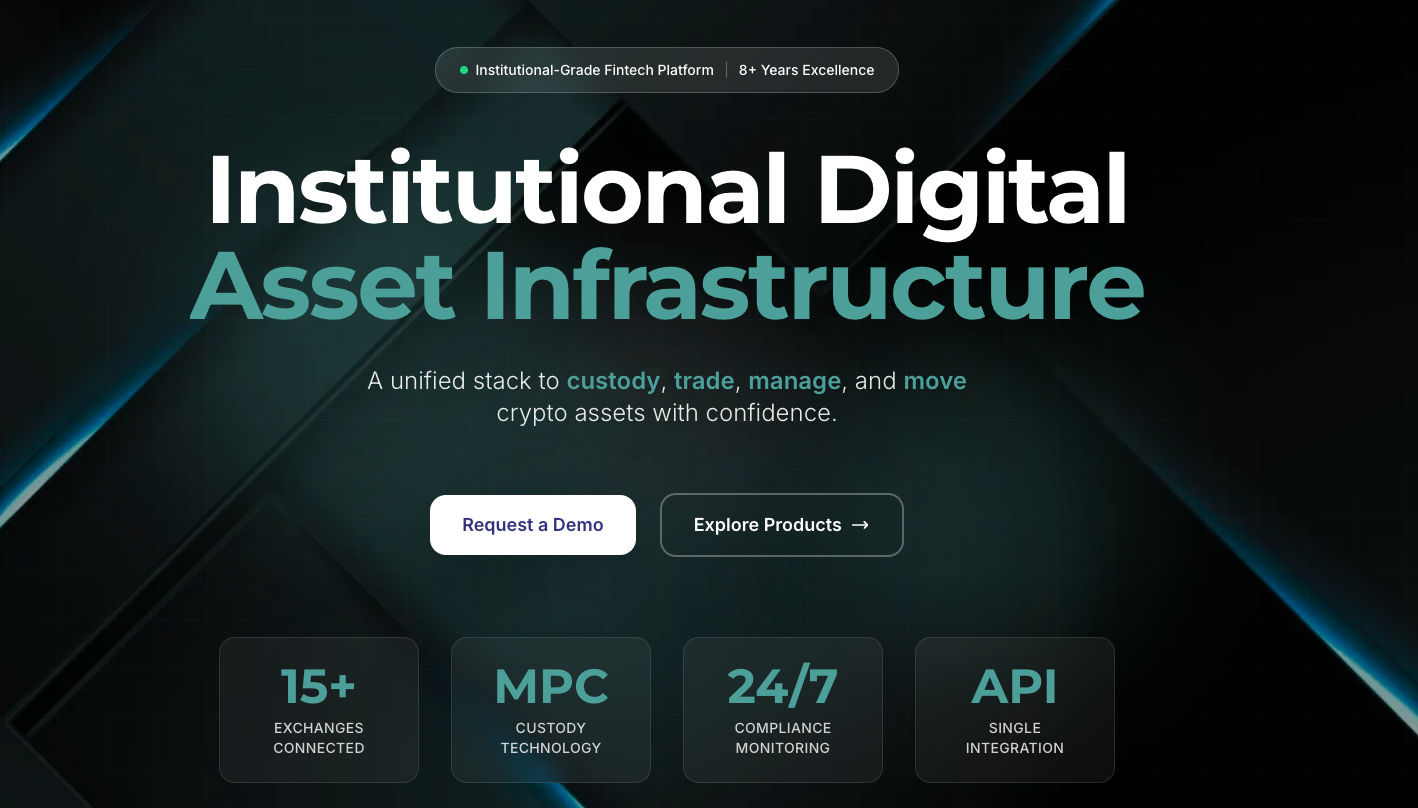
Arrel's institutional digital asset infrastructure platform provides custody orchestration, MPC technology, compliance monitoring, and multi-exchange connectivity through a single API integration.
The Arrel logo represents the company's institutional digital asset infrastructure platform, providing secure and compliant access to digital asset services through a unified orchestration layer.
Arrel expands its institutional digital asset stack with ISO 27001 and SOC 2 Type II certification, Circle-backed settlement infrastructure, and Sodot MPC.
The company achieved ISO 27001 and SOC 2 Type II certification, establishing independently audited information security, availability, and operational control frameworks across its operations.
It has also received a grant from Circle Inc, issuer of USDC, to develop chain-agnostic settlement infrastructure across Circle's Cross-Chain Transfer Protocol (CCTP). Arrel has additionally partnered with Sodot to integrate multi-party computation (MPC) technology into its platform, removing reliance on external custodians for private key management.
Digital asset adoption by financial institutions is shifting from fragmented, point-to-point integrations to unified orchestration layers. This shift is most visible in markets where regulated infrastructure already exists alongside active digital asset usage. South Africa is one such market, combining licensed exchanges, institutional-grade custody options, and an evolving regulatory framework that demands compliant, auditable infrastructure from day one, supported by ISO 27001 and SOC 2 Type II-certified operational controls.. Arrel is a non-custodial digital asset orchestration layer for financial institutions. It connects custody providers, compliance engines, liquidity venues, and blockchain rails through a single API, replacing the need to build and maintain separate infrastructure for each function.
The Circle grant funds a settlement layer that allows financial institutions to accept and settle USDC regardless of which blockchain their counterparties are on. Circle's CCTP transfers USDC natively between blockchains through a burn-and-mint mechanism. No wrapped tokens. No third-party bridges. The USDC received is the same natively issued, dollar-backed instrument on any supported chain.
Arrel exposes this as a single workflow through its existing API. A financial institution receives USDC through one integration. KYT screening runs automatically. Settlement routes to the configured destination. Fiat off-ramp access is available in the same workflow. The platform currently operates across Arbitrum One, BNB Chain, Ethereum, Optimism, Polygon, Bitcoin, Stellar, and Tron. The CCTP integration adds native cross-chain USDC flows as the network of Circle-supported chains grows.
The Sodot partnership addresses key management. Sodot's threshold signature scheme (TSS) distributes private key control across multiple independent parties. No single entity holds a complete private key at any point. This removes the single point of failure that centralised key custody creates.
Financial institutions using Arrel can now operate proprietary MPC infrastructure within an ISO 27001 and SOC 2 Type II-certified operating environment. The institutions retain full private key control with a programmable governance layer, without depending on any external custodian. Arrel itself does not hold or access client assets or keys. The Sodot integration operates alongside existing custody provider partnerships.
Arrel's custody orchestration connects multiple custody providers to an institution through a single API. New providers are added as modules without rebuilding core infrastructure. Current live integrations include Fireblocks for vault management, policy-based transaction approvals, and multi-signature controls. Ripple Custody, formerly Metaco, is scheduled for integration in Q2 2026.
Compliance is embedded at the transaction level. Every transaction is screened in real time through Chainalysis for KYT monitoring. Identity verification for individuals and corporate entities is handled through Sumsub, covering KYC, KYB, liveness checks, document OCR, sanctions screening, and ongoing monitoring. For institutions operating under South African regulatory requirements, the compliance layer aligns with FSCA frameworks and SARB expectations from the point of integration.
Arrel's ISO 27001 and SOC 2 Type II certifications provide independently audited assurance across its security controls, operational processes, access management, monitoring, and governance framework.
FATF Recommendation 16 Travel Rule compliance is scheduled for Q3 2026. The integration automates originator and beneficiary data exchange between VASPs, with jurisdiction-specific workflows aligned to FATF R16 and FIC Directive 9. Cross-VASP data exchange runs through Sumsub's GTR network, with standardised audit-ready reporting across all providers in a single format.
Tokenization of real-world assets is in active development on Arrel's platform. It is currently being used to tokenize securities, equities, and gold for institutional clients. Tokenization of funds and deposits is under development. A formal announcement is expected by mid-Q3 2026.
South Africa operates as a core regulated market within Arrel's infrastructure, providing institutional access to licensed exchanges, fiat on/off-ramps, and local liquidity within a compliant framework. Arrel aggregates liquidity across global and regional exchanges through a single API. Global venues include Binance, Bitfinex, Bitstamp, CEX.IO, LMAX, Deribit, Gate.io, HTX, Indodax, Kraken, KuCoin, OKX, and Poloniex. For South African operations, Arrel maintains dedicated integrations with Luno, VALR, and XAGO, the three most active regulated digital asset venues in South Africa, accessible alongside global liquidity through the same integration.
Arrel removes the need for per-chain integrations, multiple custodians, and fragmented compliance stacks. It replaces them with a single orchestration layer covering settlement, key management, custody, compliance, liquidity, and tokenization.
Arrel has processed more than $3.5 billion in orchestrated digital asset volume and more than $250 million in verified live transactions since 2024 across asset managers, payment service providers, remittance operators, and EMIs operating across sub-Saharan Africa, North Africa, and global corridors.
About Arrel
Arrel is a non-custodial digital asset orchestration layer enabling financial institutions, payment service providers, asset managers, and remittance operators to build and operate institutional-grade digital asset products across Africa and emerging markets. Built on its Digital Asset Platform (DAPL), Arrel integrates MPC and third-party custody, compliance engines, multi-venue liquidity routing, treasury automation, and multi-chain wallet creation through a single API. Live blockchain support covers Arbitrum One, BNB Chain, Ethereum, Optimism, Polygon, Bitcoin, Stellar, and Tron. Exchange integrations include Luno, VALR, XAGO, and more than fifteen global venues. Compliance integrations include Chainalysis for KYT and Sumsub for KYC, KYB, and Travel Rule (Q3 2026). Custody integrations include Fireblocks and native MPC via Sodot, with Ripple Custody scheduled for Q3 2026. Arrel is a member of the Circle Alliance. Products include AAMP for institutional asset managers and Arrel
Bassel Assaad
tracee
email us here
Visit us on social media:
LinkedIn
How Arrel Powers the Future of Digital Asset Payments, Treasury, and Compliance , All Through One API
Legal Disclaimer:
EIN Presswire provides this news content "as is" without warranty of any kind. We do not accept any responsibility or liability for the accuracy, content, images, videos, licenses, completeness, legality, or reliability of the information contained in this article. If you have any complaints or copyright issues related to this article, kindly contact the author above.
